
Our Products
Custom Shingles has been manufacturing Cedar and hardwood roofing products since 1982. We are distinguished by our ability to fabricate steam-bent shingles in practically any shape or size, making it easy to fully realize the artistic dreams of today’s most visionary architects, builders and homeowners.


Cedar Shingles
Cedar shingles are among our most popular products, and for good reason. Cedar roofing stands out among a sea of modern, mass-produced alternatives, making it perfect for anyone who wants the exterior of their home or building to express its own unique personality, and economically. Products include the Craft-Cutt™ line of preshaped shingles, as well as custom steam-bent and curved shingles that greatly expand the range of available design possibilities.
Western Red Cedar is standard, though both straight and precurved shingles are available in Alaskan yellow and Eastern White, too.

Cedar Shakes
Cedar shakes are distinguished from shingles by their more rustic appearance. Traditionally they were hand split, though our modern production techniques primarily involve machining, with one side left to be sawn. As a result, the finished product features a rough split face that looks great on cottages, ranch houses and vacation homes.
Our products are available in various lengths and can be cut to a shape of your choice, or bent to create a curved roof, wood shake dome or other unique architectural features

Wallaba Shingles
If you are able to spend a little more, Royalwood™ Wallaba shingles cost a little more than Cedar, but give you some of the benefits of a hardwood shingle. Wallaba is a hardwood abundant in South America that features a coarse grain and rich red color. Natural resins protect these unique wood shingles from weather damage as well as mold, mildew and insect infestation, and fire. Wallaba custom shingles can be shaped and bent to meet the needs of any project.
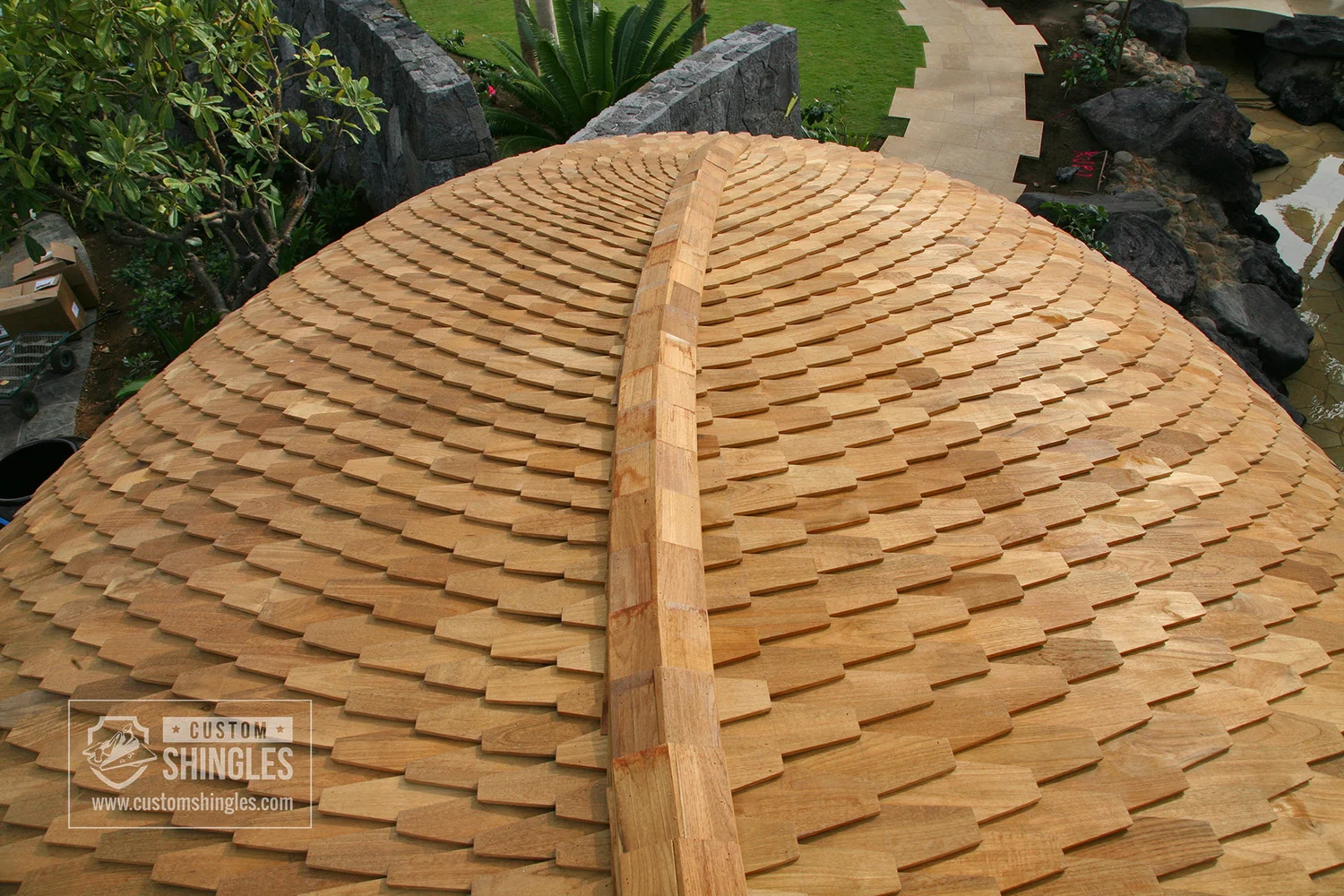
Teak Shingles
For projects demanding the best in both looks and performance, consider upgrading to Custom Shingles’ Teak shingles. Teak is an expensive, luxury product, an exotic hardwood used in applications ranging from furniture making to shipbuilding, which requires extreme moisture tolerability and resistance. It is known for its high oil content and tight grain, characteristics which offer superior strength and resistance to wind, rain and other extreme or intense weather conditions, including excellent fire resistance. Although Teak is a very hard, dense wood, our patented bending process still allows us to bend them to create curved shingles and other unique products that meet your design requirements. Use it to add a grand, sophisticated statement to your luxury home or resort.

Composite And Synthetic Shingles
When Cedar or other genuine wood options aren’t possible, we can supply a synthetic alternative that captures the look and feel of the real thing, often with improved durability and other characteristics. Choose composite shingles if local fire or building codes require the use of Class A materials.
Custom Shingles’ synthetic products are made primarily from recycled materials, and can be shaped to form geometric dome roofs and other features, just as our steam bent Cedar shingles can.
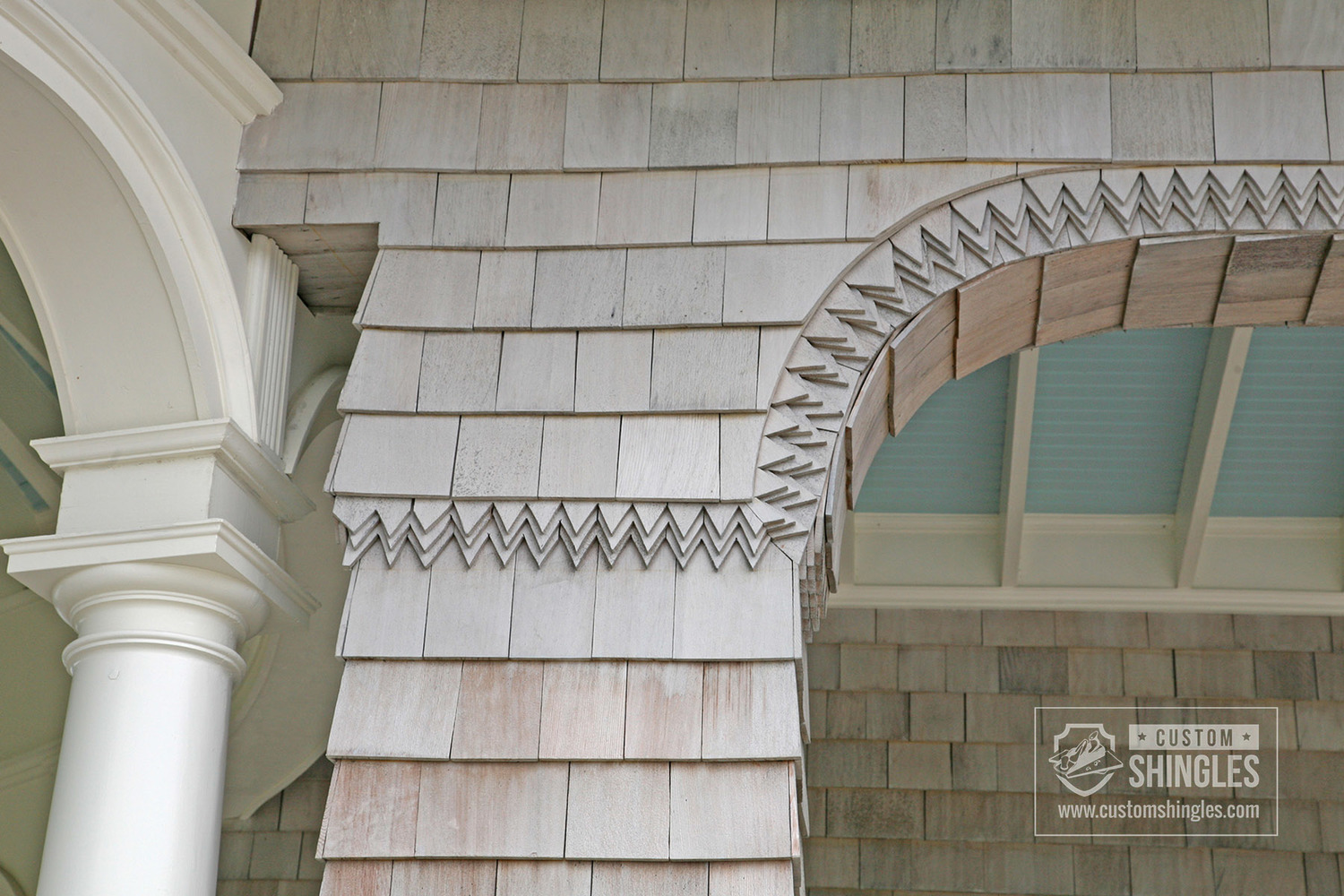
Craft-Cutt Shingles
The Craft-Cutt™ product line is comprised of an extensive selection of precut Cedar shingles in popular shapes such as arrow, sawtooth, diamond, fish scale and more. If you’re looking for a fast and economical shingle for use in a Cedar roof swale or wood shake dome, our Craft-Cutt™ products are the best place to start.
Explore our website and Portfolio Gallery to browse our full selection of products, or contact our office directly to request a quote for your upcoming project.
Request A Quote
Need advice? Send us an email, using the form below, or call our office at 386-487-1015 (local) or (877) 323-3553 (toll-free)